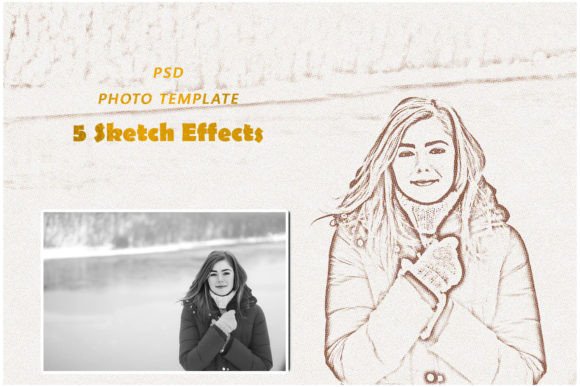
Transform Photos into Art: 5 Sketch Effects Photo Templates for Designers
In a digital landscape saturated with high-definition photography and slick vector graphics, there is a distinct charm in the raw, tactile feel of a hand-drawn sketch. It evokes nostalgia, creativity, and a sense of artisanal craftsmanship. However, manually converting a photograph into a convincing sketch is a labor-intensive process requiring advanced skills in Adobe Photoshop. This is where the utility of 5 Sketch Effects Photo Templates becomes undeniable. These resources bridge the gap between complex digital manipulation and immediate artistic results, offering a streamlined workflow for professionals and hobbyists alike.
The core appeal of these templates lies in their ability to transform standard photography into stylized artwork without destroying the original file structure. By utilizing PSD Smart Object technology, these templates allow users to simply drop their image into a designated layer, save, and watch the magic happen. The result is a sophisticated digital interpretation of traditional drawing techniques, ranging from rough graphite textures to fine ink lines. This capability is invaluable for anyone looking to add a unique visual hook to their content, whether for a blog post, a marketing campaign, or a personal art project.
The Anatomy of the Sketch Effect: Style and Visual Character
When we talk about the "style" of the 5 Sketch Effects Photo Templates, we are discussing a range of artistic interpretations. These are not simple filters that merely detect edges; they are complex layer structures designed to mimic the depth, shading, and texture of real media. You might encounter styles that replicate the soft shading of charcoal, the cross-hatching of a ballpoint pen, or the loose, expressive lines of a gesture drawing. The visual personality of these effects tends to lean towards the artistic and the bespoke. It strips away the sterile perfection of digital photography and replaces it with the warmth of human imperfection.
The overall aesthetic is highly versatile. Unlike a specific display font or script font that dictates a strict mood, a sketch effect adapts to the source image. A photo of a bustling city street rendered in a sketch style can feel gritty and urban. A portrait converted to a pencil sketch can feel intimate and soft. This adaptability makes the templates a powerful tool in a designer's arsenal. They function much like a high-quality typeface—they set a tone. While a serif font implies tradition and authority, a sketch effect implies creativity, thought, and artistic intent. It is a form of modern typography applied to imagery, where the photo itself becomes a stylistic element.
Real-World Applications: From Brand Identity to Social Media
Understanding where to deploy these effects is just as important as knowing how to use them. For brand identity, sketch effects can be a game-changer. If a brand wants to position itself as approachable, creative, or artisanal, using sketch-style imagery in their marketing materials reinforces that message. Consider a small coffee roastery or a hand-crafted jewelry business; using these templates for their product photography creates a cohesive look that screams "handmade" and "quality." This is far more effective than using generic stock photography.
In the realm of editorial design and publishing, these templates solve the problem of inconsistent source material. A magazine article or blog post might require a specific mood that the available photos do not convey. By applying a sketch effect, you can unify disparate images under a single artistic style, creating a cohesive visual flow. This is particularly useful for web design and social media graphics. On platforms like Instagram or Pinterest, where visual noise is high, a sketch-style image can stop the scroll. It breaks the pattern of standard photography, increasing engagement and click-through rates.
Furthermore, the applications extend into packaging design and physical merchandise. Imagine a t-shirt line or a poster series. Using these templates allows you to create complex artwork from simple photos, which can then be printed on physical goods. The 3000 x 2000 resolution ensures that the output is crisp enough for large-format printing, maintaining the integrity of the linework even when scaled up. This level of versatility makes the asset valuable not just for digital marketers, but for graphic designers working in print and product development.
Mastering the Workflow: PSD Smart Objects and Customization
The technical backbone of these templates is the PSD Smart Object. For those unfamiliar, a Smart Object in Photoshop is a container that preserves an image's source content. This means you can scale, rotate, or apply effects to the image without permanently altering the original pixels. In the context of 5 Sketch Effects Photo Templates, this is the engine that drives the customization. You do not need to manually draw lines or adjust curves. The heavy lifting has been done by the template creator. Your job is to provide the raw material (your photo) and fine-tune the variables.
Customization is where you can really make the effect your own. While the templates provide a starting point, most allow you to adjust the intensity of the lines, the darkness of the shading, and the texture of the paper or canvas. This is crucial for maintaining visual hierarchy. If the sketch effect is too aggressive, it might obscure important details of your subject. By tweaking the layers, you can ensure that the main focus of the image remains clear while the artistic flair enhances the background or secondary elements.
Think of it like pairing a font. You wouldn't use a heavy, bold handwritten font for body text because it hurts readability. Similarly, you need to ensure the sketch effect complements the image content rather than overwhelming it. The high resolution of 3000 x 2000 pixels gives you plenty of data to work with. This is a premium font equivalent in the image world—it offers high fidelity and detail. Whether you are a seasoned Photoshop user or a hobbyist just learning the ropes, the Smart Object workflow democratizes professional-grade design effects.
Evaluating Fit and Strategic Integration
When deciding to incorporate 5 Sketch Effects Photo Templates into your project, the first step is evaluating the fit. Ask yourself: does this style serve the story I am trying to tell? If you are a corporate law firm, a sketch effect on your team headshots might seem unprofessional. However, if you are a children's book author or a creative agency, it is the perfect choice. It is about context. The sketch effect is a specific tool for a specific job, much like choosing a sans serif font over a serif font for a tech startup versus a luxury brand.
Consider the readability of the final image. In design, readability applies to images just as it does to text. If the sketch lines are too chaotic, the viewer won't understand what they are looking at. Good templates allow you to control this. You should also think about consistency. If you use a sketch effect for one image in a series, you generally need to use it for all of them to maintain a cohesive brand identity. These templates make consistency easy because the parameters are saved within the file.
Finally, always review the licensing. Most design assets of this caliber come with a license that covers both personal and commercial use, but it is vital to check the specifics. Can you use the final image on a product for sale? Can you use it in a client's logo? Understanding these terms prevents legal headaches down the road. By treating these templates not just as filters but as strategic design components, you elevate your work from amateur to professional. They provide a shortcut to high-end aesthetics, allowing you to focus on the message rather than the mechanics of image manipulation.