Canva Minimalist Daily Planner Templates for Clarity
The modern quest for productivity often feels cluttered. We download apps, subscribe to complex software, and try to implement "life-hack" systems that take longer to maintain than the actual work they are supposed to manage. There is a growing movement back to simplicity—specifically, the tactile and visual clarity of a well-designed daily planner. However, not everyone has the time or budget to commission a custom design or purchase expensive stationery. This is where Canva Minimalist Daily Planner Templates bridge the gap between functionality and high-end design. They offer a sophisticated, professional aesthetic that strips away the noise, allowing you to focus on what actually matters: your schedule and your goals.
The Power of Visual Silence
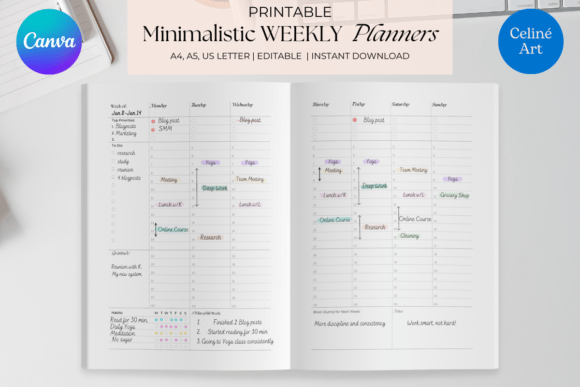
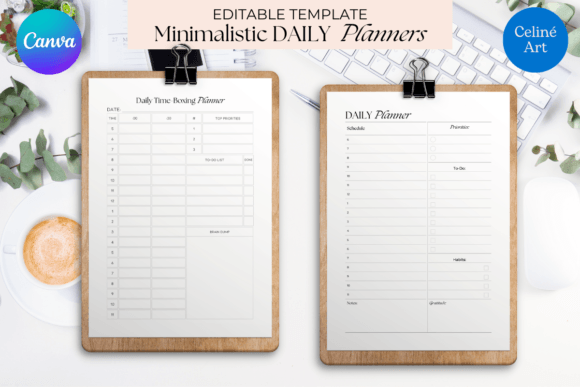
When we talk about "minimalism" in design, we aren't just talking about empty space; we are talking about visual silence. It is the strategic use of negative space to guide the eye. These templates embody a clean, modern typography approach that feels inherently calming. You won't find distracting borders, cartoonish illustrations, or overwhelming color palettes here. Instead, the visual personality is defined by crisp lines, ample margins, and a balanced layout. This style of design leverages the serif font and sans serif font pairing to create a hierarchy that is easy to scan. The headers might use a clean sans serif to denote sections like "Priorities" or "Notes," while the body text remains highly legible. This isn't just about looking pretty; it’s about reducing cognitive load. When your planner looks professional, you are psychologically primed to treat your daily tasks with the same level of professionalism.
Real-World Applications for Business and Life
While the primary function is time management, the versatility of these assets extends far beyond a simple to-do list. For the entrepreneur or small business owner, these templates serve as a canvas for operational planning. Imagine using the A4 size to print out weekly project timelines for your team or using the Letter size for strategic brainstorming sessions. Because the design is neutral, it functions as a premium font background for your own brand identity. You can easily overlay your company logo without it clashing with the planner's layout.
For content creators and marketers, the application shifts toward social media graphics and editorial design. You can screenshot a filled-out daily plan to share your "behind-the-scenes" process on Instagram or LinkedIn. It projects an image of competence and organization. Furthermore, bloggers and publishers can utilize these layouts for packaging design inserts or as part of a digital download bundle for their own audience. If you are a crafter or hobbyist, the ability to customize the colors allows you to match the planner to your personal aesthetic, turning a utilitarian object into a piece of art you enjoy using every day.
Customization: Making the Template Yours
One of the strongest arguments for using Canva is the ease of customization. These templates are not rigid; they are design assets built for modification. The "minimalist" aspect acts as a skeleton that you can flesh out with your specific needs.
- Color Theory: A minimalist layout relies heavily on color for emphasis. You can change the accent colors to match specific project categories—perhaps blue for client work and orange for personal errands. This subtle change aids in rapid visual recognition.
- Typography Tweaks: While the default modern typography is usually spot-on, you have the freedom to swap fonts. If your business uses a specific display font or script font, you can apply it to the headers to reinforce your brand identity if you are printing these for client-facing use.
- Layout Adjustments: Need more space for notes? Less space for an hourly schedule? The drag-and-drop interface allows you to move text boxes and lines to suit your workflow. This flexibility is crucial because no two days—or businesses—operate exactly the same way.
Choosing the Right Size and Format
The practicality of a planner depends on its physical format. The templates are offered in three distinct sizes, each serving a different purpose in the ecosystem of print and digital usage.
- Letter Size (8.5’’ x 11’’): This is the standard for North American offices. It is ideal for printing on standard inkjet or laser printers. The large surface area allows for detailed scheduling, making it perfect for project managers or those who prefer a "spread" view of their day.
- A4 (8.3’’ x 11.7’’): The international standard. If you are a global business or prefer a slightly taller aspect ratio, this is your go-to. It fits perfectly into standard binders and folders used outside of North America.
- A5 (5.8’’ x 8.3’’): This is the pocket-rocket of planners. Half the size of A4, this is perfect for portability. It fits easily into handbags, tote bags, or briefcases. This size is excellent for daily carry, allowing you to jot down notes on the go without lugging around a full binder.
Evaluating Fit and Readability
Before committing to a specific template for a long-term project, it is worth applying some design scrutiny. As a designer or strategist, you should evaluate the readability of the template when filled with data. A creative font might look beautiful in the demo, but if you write in all caps or have messy handwriting, you need ample line spacing (leading) to ensure the page doesn't become a wall of text.
Check the visual hierarchy. Does the date stand out enough? Is there a clear distinction between high-priority tasks and low-priority notes? Good web design and editorial design principles apply here: the most important information should be the most accessible. If you plan to use these for commercial distribution—perhaps as a freebie for your email subscribers—ensure the commercial font licensing within Canva allows for that usage. Most standard elements in Canva are free for commercial use, but it is always best practice to verify the specific license of any premium elements you incorporate.
Streamlining Your Workflow
Ultimately, the goal of adopting a Canva Minimalist Daily Planner Template is efficiency. By starting with a professionally designed foundation, you eliminate the "blank page paralysis" that often accompanies starting a new organizational system. You don't have to be a graphic design expert to create something that looks polished and professional. Whether you are a freelancer managing client deliverables, a parent organizing a chaotic household, or a creative director planning a product launch, these templates provide the structure necessary to execute your vision. They prove that you don't need complexity to achieve clarity; sometimes, all you need is a clean line and a blank space ready for your ideas.